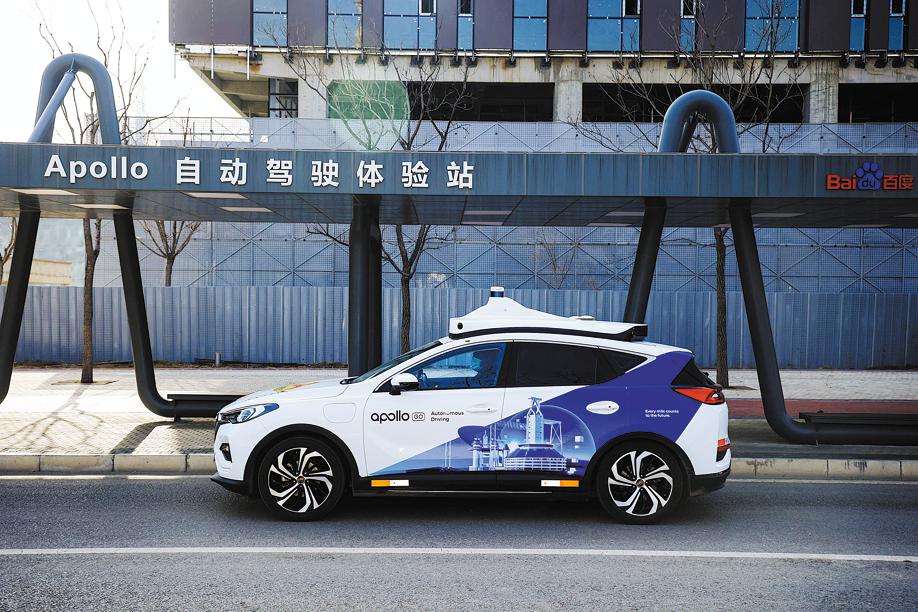
Chinese-built robotaxis could soon become a familiar sight on London roads, as ride-sharing giants Uber and Lyft move forward with plans to trial autonomous vehicles in the UK from 2026.
Both companies have announced partnerships with Chinese technology firm Baidu, aiming to secure regulatory approval to begin limited testing in the capital.
Baidu’s Apollo Go driverless taxi service is already operating in dozens of cities, largely across China, where it has logged millions of passenger journeys without a human driver behind the wheel.
The prospect of UK trials has been welcomed by government figures, though concerns about safety and congestion remain prominent.
Transport Secretary Heidi Alexander described the announcement as “another vote of confidence in our plans for self-driving vehicles.”
“We’re planning for self-driving cars to carry passengers for the first time from spring, under our pilot scheme – harnessing this technology safely and responsibly to transform travel,” Ms Alexander said in a post on X.
Ride-Sharing Firms Accelerate UK Plans
Uber confirmed earlier this year that it had brought forward its timeline for testing driverless cars in Britain, aligning with the government’s push to accelerate regulations for small autonomous commercial services such as taxis and shuttle buses.
The company said its collaboration with Baidu would help position the UK as a leader in future mobility.
“We’re excited to accelerate Britain’s leadership in the future of mobility, bringing another safe and reliable travel option to Londoners next year,” Uber said when confirming the partnership.
Lyft has also been laying the groundwork for European expansion of its autonomous offering.
In August, the firm revealed plans to deploy driverless taxis in both the UK and Germany as part of a broader agreement with Baidu.
Lyft already operates autonomous rides in Atlanta in the United States, while Uber runs a robotaxi service there through its partnership with Waymo.
Lyft chief executive David Risher said London passengers would be “the first in the region to experience Baidu’s Apollo Go vehicles.”
Regulatory Hurdles and Scaling Challenges
Despite the enthusiasm, both companies must still convince UK regulators that the technology is ready for public roads.
Mr Risher said that, if approved, Lyft would begin with a fleet of several dozen vehicles testing next year, before scaling up to hundreds.
However, experts caution that autonomous vehicles cannot be expanded as easily as digital platforms.
Jack Stilgoe, professor of science and technology policy at University College London, warned that the jump from pilot projects to widespread adoption is significant.
“There’s a big difference between having a few test vehicles using public streets as their laboratory and a fully-developed, scaled-up system that becomes a real transport option for people,” he said.
Public Trust and Congestion Concerns
While self-driving vehicles are often promoted as safer than human drivers, public confidence remains fragile.
A YouGov poll conducted in October found that nearly 60% of UK respondents would not feel comfortable riding in a driverless taxi under any circumstances.
Trust in the technology also appears limited, with 85% saying they would choose a human-driven cab if price and convenience were the same.
High-profile incidents involving autonomous vehicles have added to the unease, including cases where passengers were trapped or traffic was disrupted.
Waymo reportedly suspended its San Francisco service after several vehicles stopped functioning during a power cut.
Prof Stilgoe said the UK should focus on setting strong standards, particularly around safety, privacy, and congestion.
“London has been really successful at getting cars out of its city centre,” he said.
“When it comes to traffic, the only thing worse than a single-occupancy car is a zero-occupancy one.”