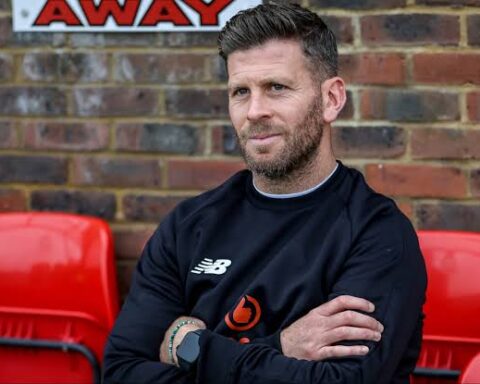
Chelsea’s internal tensions have burst into the open in emphatic fashion, with manager Liam Rosenior issuing a two-game ban to midfielder Enzo Fernandez after the Argentinian was publicly critical of the club’s management structure and the sacking of former head coach Enzo Maresca.
The episode represents the most significant public disciplinary action at Stamford Bridge this season, and it comes at a moment when Chelsea can ill afford any more distractions.
Fernandez triggered the sanction after telling Mexican broadcaster TUDN that he found Maresca’s mid-season dismissal difficult to accept. “I don’t understand it either,” he said in comments widely reported across the English media. “Obviously, it was a departure that hurt us a lot because we had an identity. He always had a very clear identity when it came to training and playing, and obviously his departure hurt us a lot, especially in the middle of the season.” Coming from a player who remains a key piece of Chelsea’s midfield, the public nature of those words left Rosenior with little choice but to respond.
Rosenior addressed the issue head-on in his press conference, expressing personal disappointment while carefully avoiding any personal attacks on Fernandez. “It’s disappointing for Enzo to speak that way. I have got no bad words to say about him but a line was crossed in terms of our culture and what we want to build,” the head coach said. “As a character, a person and a player, I have the utmost respect. He’s frustrated because he wants us to be successful.” That framing was intelligent — separating the individual from the behaviour, while making clear that club culture is non-negotiable.
What makes this particularly delicate is the timing. Chelsea are fighting on multiple fronts this season, and losing Fernandez — one of their most technically accomplished central midfielders — from the squad even temporarily, adds to the selection headaches that Rosenior is already managing. The club also ruled him out of two significant upcoming fixtures, which in a congested schedule represents a genuine on-field cost.
Fernandez has also been linked with Real Madrid by various outlets, and the public airing of his frustrations will inevitably feed speculation about a summer exit. Chelsea’s ownership operates with a clear philosophy around player behavior and culture — one that led to Maresca’s own departure in January — and Rosenior’s handling of this situation will be watched as a test of whether he can impose genuine authority in the dressing room.
The incident also adds to a broader pattern at Chelsea this season where multiple players have been openly critical of the club’s direction. Marc Cucurella also gave an interview expressing similar reservations, though has so far escaped formal sanction. The pattern suggests something more structural is at play — a squad that is still searching for a settled identity after years of managerial churn and aggressive squad reconstruction.
Rosenior himself is under significant pressure, with four consecutive defeats across all competitions having led sections of the fanbase to call for his removal. His management of the Fernandez situation will likely define whether he can maintain authority as the season enters its final stretch, with Chelsea pushing for Champions League qualification from their current position in the top five.
For Chelsea to reach their objectives this season, they need everyone fully committed to the same direction. Rosenior’s message was clear: individual grievances, however legitimate, cannot be processed through external media.